
 News
News
NUCAPS has participated in the SYNTHBIOMICS project, focused on disruptive synthetic biology innovations to advance health, food, sustainable energy and industrial decarbonisation, which has now concluded after more than two years of collaborative research.
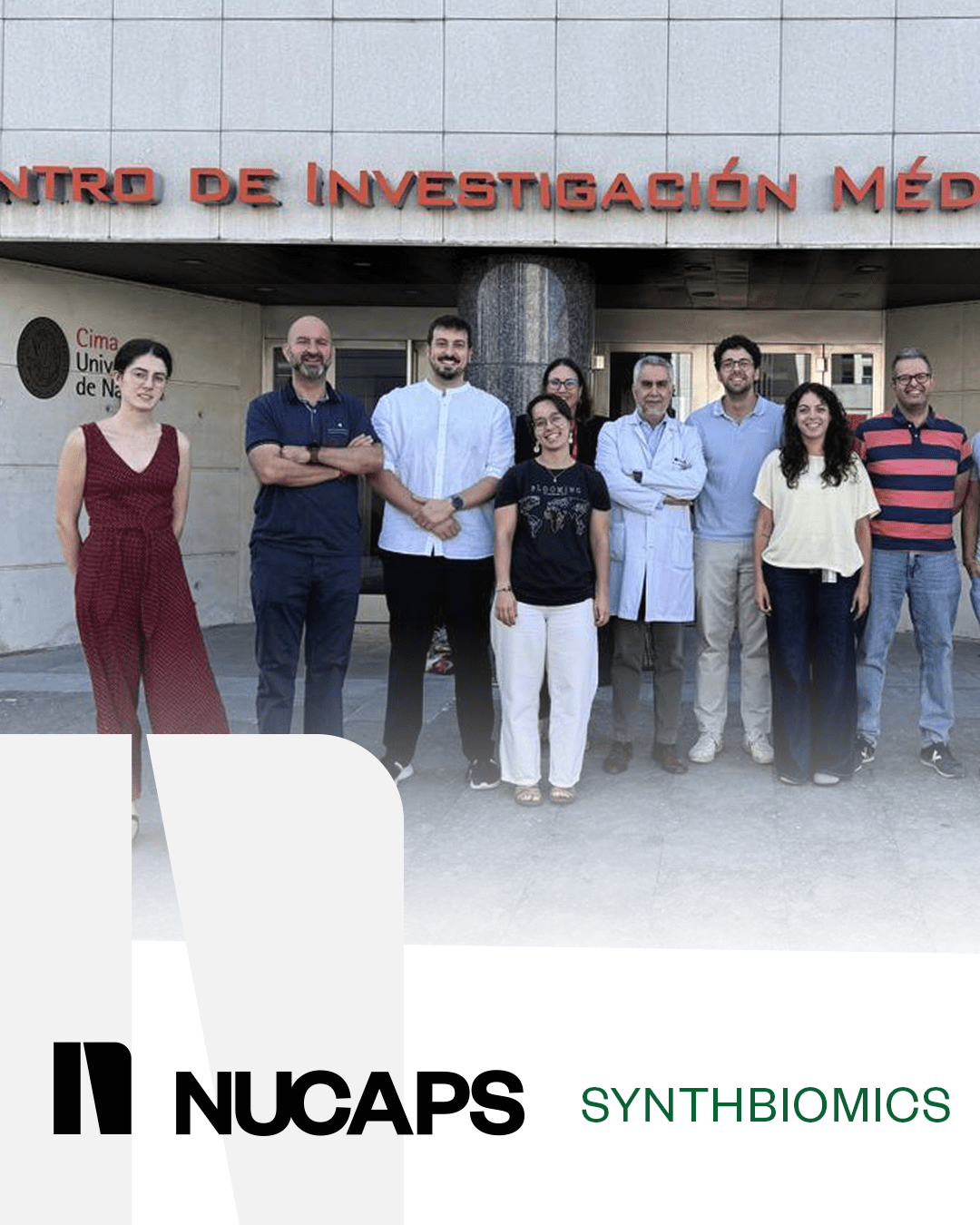
Coordinated by FIMA through the Cima Universidad de Navarra, the consortium brought together seven Navarrese entities: CNTA, CENER, NASERTIC, Centro Stirling–MC3, TAIREL DATA and NUCAPS Nanotechnology. The Department of Industry and Ecological and Digital Business Transition awarded 1.46 million euros to this project under the Strategic R&D Projects 2023-2026 call, within the SIBERIA biotechnology challenge.
The project addressed three main lines of work: the development of synthetic nanobodies with diagnostic and therapeutic potential; the generation of new recognition elements for biosensors designed to detect food contaminants; and the modification of microorganisms capable of transforming carbon-rich gases into chemical compounds of interest.
In the health area, NUCAPS, in collaboration with Cima, studied the incorporation of nanobodies into zein nanoparticles to develop targeted delivery systems for active substances. The work made it possible to obtain homogeneous particles, optimise binding mechanisms and establish preparation procedures compatible with future cellular assays. This advance strengthens NUCAPS’ capabilities in the design of protein-based encapsulation and nanodelivery solutions.
The project’s principal investigator and scientific director of the Cima Universidad de Navarra, Dr Antonio Pineda-Lucena, noted that “SYNTHBIOMICS has demonstrated that Navarra has complementary capabilities to address complex synthetic biology projects, from DNA design and synthesis to functional characterisation and the potential valorisation of results”.
The project concludes with new libraries, candidates, modified strains, prototypes, methodologies and infrastructures that reduce technological uncertainty and establish a solid foundation for future initiatives. Next steps will include the validation of selected nanobodies and aptamers, cellular evaluation of the targeted nanoparticles, improvement of the biosensors and optimisation of microbial routes for the utilisation of carbon-rich gases.
Through its participation in SYNTHBIOMICS, NUCAPS reaffirms its commitment to collaborative innovation and to the development of technologies that improve the efficacy and precision of active ingredient delivery in the fields of health and nutrition.